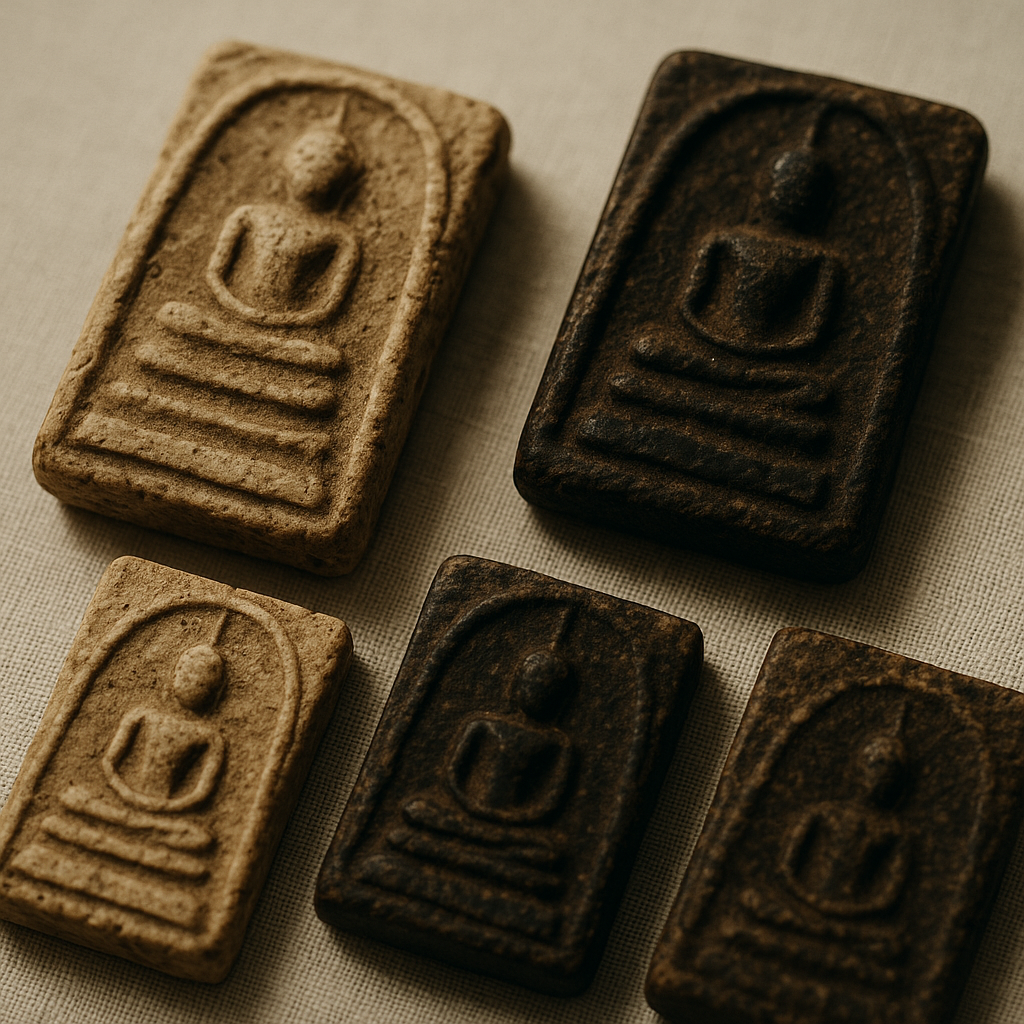
Phra khrueang (พระเครื่อง) are small consecrated objects, typically worn on the body or kept at a place of devotion, that occupy a central position in Thai Buddhist life. They are produced within monastic lineages, consecrated by monks through formal ritual, and carried by devotees across every level of Thai society. Amulets are not purchased in the conventional sense: they are rented, using the convention called chao (เช่า), a custodial relationship that reflects the object's sacred rather than commercial identity.
What Phra Khrueang Are (and What They Are Not)
The category of phra khrueang is broad. It encompasses pressed clay tablets bearing the image of a seated Buddha or a revered monk, metal medallions struck with a monk's portrait, rolled metal scrolls called takrut (ตะกรุด) inscribed with sacred diagrams, small figurines, and woven or knotted cord items. What these objects share is not a fixed form but a common identity: each has passed through a ritual process of consecration administered by a member of the monastic community.
What phra khrueang are not is equally important to establish. They are not souvenirs, though they are sold in tourist markets and appear in airport shops. They are not lucky charms in the folk-magic sense, though they are carried for protection. They are not idols in the theological sense that concerns some observers outside the Buddhist tradition. And they are not commodities in the ordinary sense, even though they have a functioning secondary market with established valuations.
The distinction between a sacred object and a commercial one is genuinely important here. A phra khrueang derives its identity from the lineage and practice of the monk who consecrated it, from the muan sarn (มวลสาร), the sacred substances blended into its material, and from the ritual attention it has received. A mass-produced pendant made in a factory and given no ritual treatment is not a phra khrueang in the sense used by practitioners and collectors. The difference is not visible to the naked eye and cannot be determined by appearance alone. This is why lineage documentation and consecration records matter so much to serious collectors.
The renting convention, chao (เช่า), deserves explanation on first encounter. In Thai collector and devotional culture, amulets are understood to be rented rather than purchased. The devotee pays a sum, but the transaction is framed as entering a custodial relationship with an object whose deeper identity belongs to the temple or lineage that produced it. This framing shapes how practitioners talk about, care for, and eventually pass on the objects they carry.
A Living Tradition
The practice of consecrating and carrying small sacred objects has roots that predate the formal establishment of Thai Buddhism. Amulet-like objects have been recovered from Dvaravati-period sites, suggesting a tradition of sacred miniatures at least as old as the 12th century BE (7th century CE). The development of the pressed clay tablet as a distinct form is associated with the Sukhothai and early Ayutthaya periods, roughly the 18th to 20th centuries BE (13th to 15th centuries CE). Temple caches, called kru (กรุ), have yielded tablets from these periods in good numbers, establishing a continuous material record.
By the Rattanakosin period, the amulet tradition had developed into something recognizable as its contemporary form. The great monk Somdej Phra Phutthachan Toh Phrommaransi of Wat Rakhang Khositaram in Bangkok, active in the BE 2400s (mid-19th century CE), produced what became the canonical example of the pressed-tablet type: phra somdej (พระสมเด็จ), a chalk tablet pressed with sacred powder bearing a seated Buddha in a tiered arch frame. The tradition held that his tablets were made from a mixture of sacred materials accumulated over decades of practice, including pollen, lime, old amulet powder, and relics. Devotees regard the series he produced as the standard against which all subsequent phra somdej are measured.
The 20th century brought the tradition into mass reproduction without displacing its ritual logic. Large-scale consecration ceremonies, called phutthaphisek (พุทธาภิเษก), could involve hundreds of monks chanting simultaneously over tens of thousands of objects. The scale of production grew, but the underlying claim remained the same: each object has passed through a ritual process administered by monks of recognized standing.
Today, temples throughout Thailand produce amulets associated with their senior monks. The tradition is alive in both devotional and collector communities, and major series are followed, documented, and analyzed in specialist Thai-language publications with the thoroughness of academic journals.
What Thai Amulets Are Made From
The material composition of an amulet is named by the term nuea (เนื้อ), meaning flesh or body. The nuea is not merely a substrate: it is part of the object's sacred identity, because it incorporates the muan sarn, the sacred substances specific to the producing monk and temple.
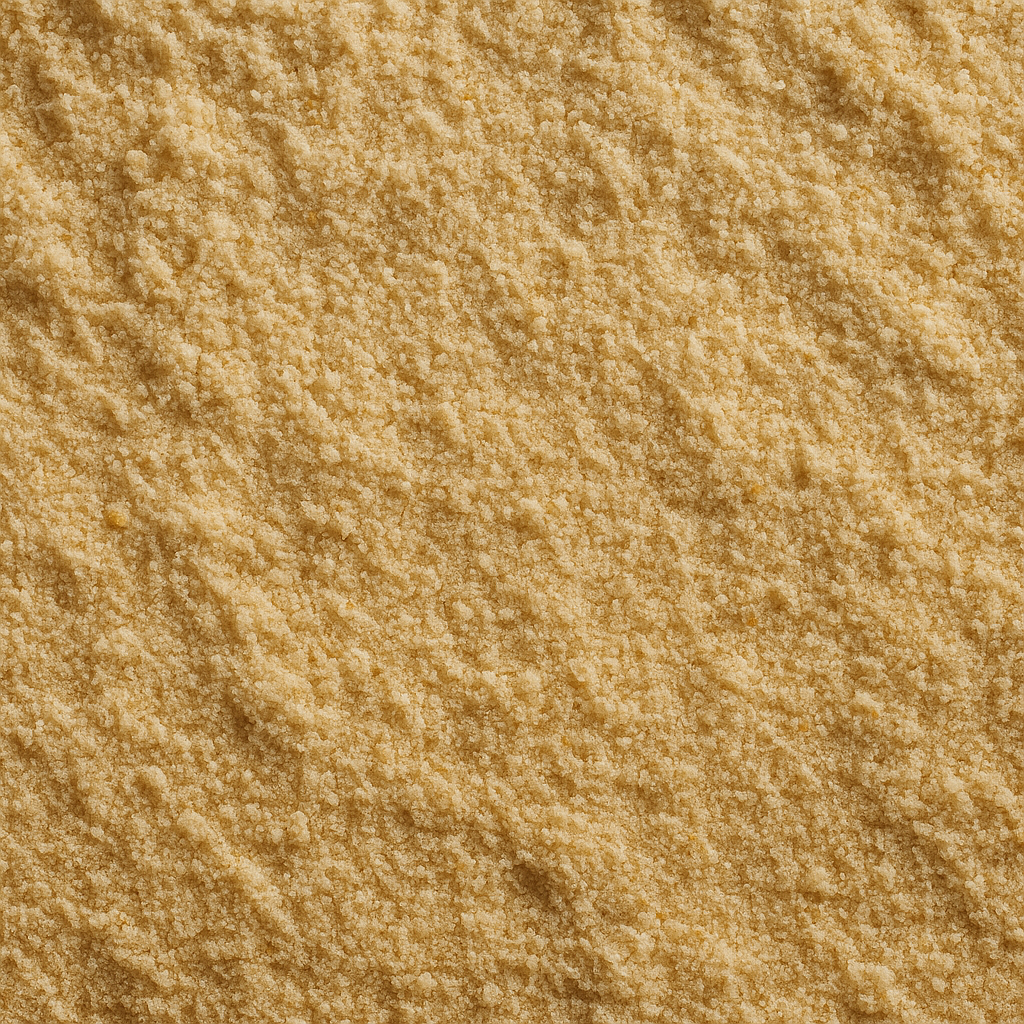
The most common nuea for pressed tablets is nuea phong, a composition of chalk powder, sacred herb powders, pollen, and various organic and mineral materials specific to the producing monk's lineage. The surface of a nuea phong tablet, examined closely, reveals a texture compounded from dozens of components. The color ranges from pale cream to deep grey depending on the proportions used. Old tablets develop a patina and surface condition that collectors study as indicators of age.
Metal amulets use a nuea loha, an alloy composition that may incorporate lead, tin, copper, silver, gold, and other metals in proportions determined by the monk or specialist overseeing production. The choice of metals and their proportions is considered meaningful: specific combinations are associated with specific protective or auspicious qualities in the tradition. Takrut (ตะกรุด), the rolled metal scroll form, may use a single metal or an alloy, inscribed before rolling with yant (ยันต์), sacred geometric diagrams.
The muan sarn incorporated into amulet material may include soil collected from sacred sites, fragments of older consecrated objects ground to powder, pollen from specific flowers used in ritual, substances associated with the monk's own practice over decades, and materials from significant places in Buddhist history. A documented list of muan sarn used in a series is a significant piece of scholarship, and collectors study such lists as seriously as they study the visual form of the resulting objects.

How Amulets Are Blessed
Two terms describe the ritual process of consecration, and the distinction between them matters.
Pluksek (ปลุกเสก) is the act of consecration itself. The word combines components meaning "to awaken" and "to sprinkle with sacred water," and the practice involves monks entering a state of meditative concentration and directing that concentration toward the objects being consecrated, while chanting katha (คาถา), sacred verses drawn primarily from Pali. Pluksek may be performed by a single monk working alone in a private room over a batch of objects, or by a small group working together. The tradition holds that the monk's accumulated merit and the potency of the chanted verses are transferred into the object through this practice.
Phutthaphisek (พุทธาภิเษก) is the large-scale formal ceremony. It involves a structured ritual event with a defined assembly of monks, often numbering in the hundreds, chanting in coordinated sequence through the night. Phutthaphisek ceremonies are public events with documented participant lists, and the documentation of who attended and in what capacity is taken seriously by collectors as evidence of a series's ritual standing.
The role of the presiding monk's lineage is central. A monk's standing to consecrate is understood in the tradition to derive from his teacher's standing, and that teacher's teacher's standing, tracing back through the lineage to recognized masters. This is why lineage is a primary criterion in evaluating an amulet's significance. Two objects of identical form and material but consecrated by monks of different lineage standing occupy different positions in the devotional and collector world.
Why People Wear Them
The motivations of devotees who wear phra khrueang are not uniform, and it would be inaccurate to reduce them to a single explanation.
Many wearers frame the practice primarily as merit-making: carrying an amulet consecrated by a revered monk is a form of ongoing devotional relationship with that monk and his lineage. The act of wearing the object and caring for it is understood as part of a reciprocal practice.
The tradition holds that specific amulets provide specific protective qualities. Soldiers in the Thai military have historically worn amulets in significant numbers. Muay Thai fighters often wear amulets during training and competition, a practice documented in detail in sports journalism and temple records alike. Police officers, taxi drivers, and workers in physically demanding or uncertain occupations carry amulets as a form of protection.
Collectors constitute a distinct category. The sian phra (เซียนพระ), the serious amulet enthusiast, may approach the objects primarily as a field of connoisseurship, studying material composition, mold types, consecration documentation, and market history with scholarly intensity. Devotion and connoisseurship are not mutually exclusive, and many serious collectors are also genuine practitioners.
Where to Begin
For a newcomer to the subject, the most productive entry points are the objects that have generated the most scholarship: the five canonical antique types known as the benjapakee (บัญจภาคี), and the consecration tradition that gives all amulets their identity.
The Benjapakee guide covers the five types in detail, with attention to form, material, and provenance. The Consecration guide explains the ritual process from pluksek through phutthaphisek. The Glossary defines the core vocabulary. The Monks index profiles the abbots and lineage teachers whose objects define the tradition.
The vocabulary of the field is dense, and the Thai-language primary sources are significant. Lokavidu exists to make that body of knowledge accessible to English-language readers who approach it in good faith.